Workforce Trajectories of Greater Minnesota’s High School Graduates
Every year, thousands of students graduate from high schools across Greater Minnesota and step into very different futures. Some head off to colleges. Others enter the workforce directly. Still others disappear from the state’s data entirely — leaving the region, leaving the workforce, or leaving no trace in the records that would tell us where they went.
This project follows those graduates. Drawing on data spanning 2008 to 2023 across five regions of Greater Minnesota — Northwest, Central, Southwest, Northeast, and Southeast — we traced the long-term paths graduates take after leaving high school, and what those paths reveal about opportunity, mobility, and workforce readiness outside the Twin Cities metro.
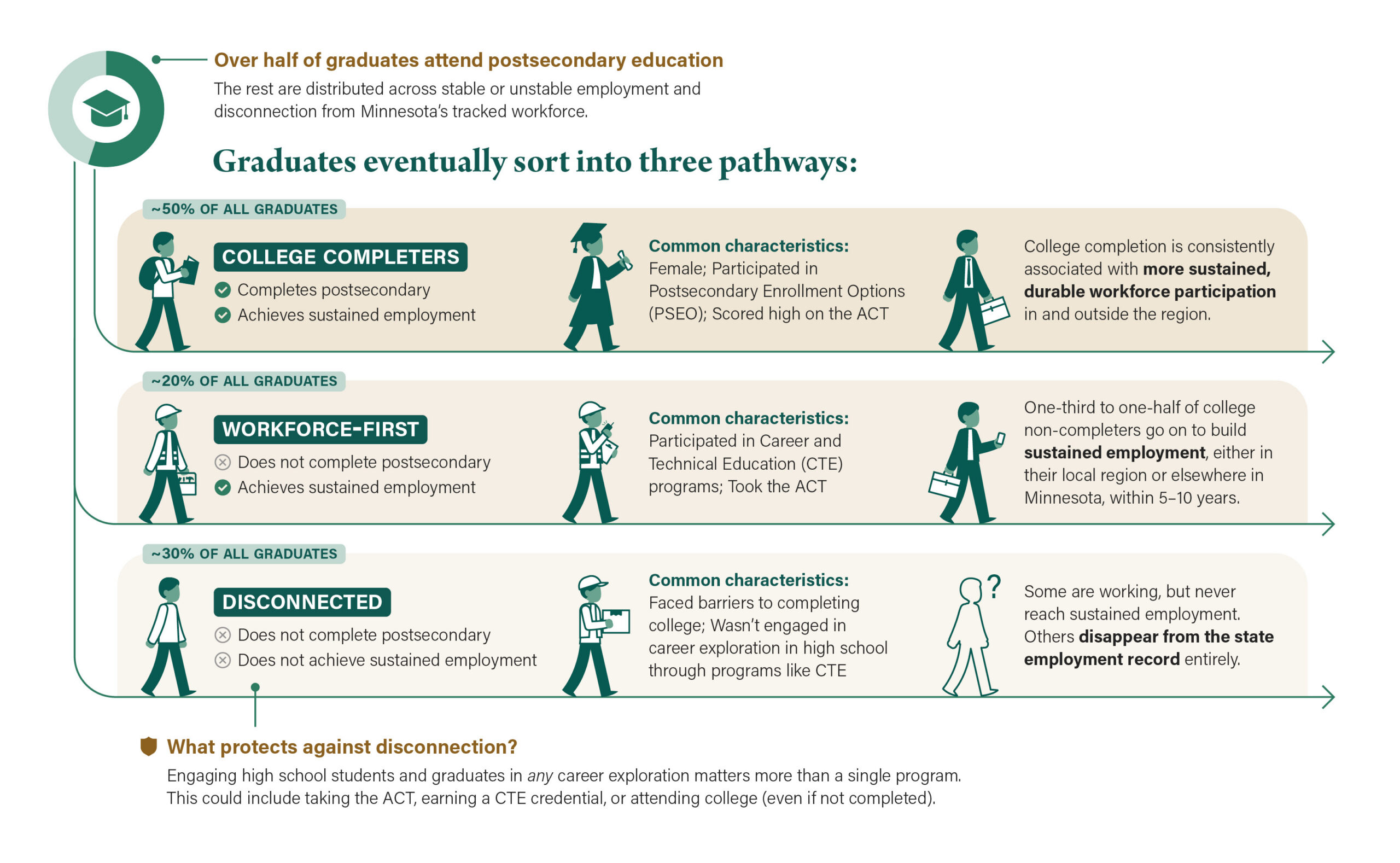
To make sense of these trajectories, we grouped graduates into three broad pathways: College Completers, who pursue and finish postsecondary education; Workforce-First, who move directly into employment; and Disconnected, graduates who show up as neither steadily employed nor enrolled in Minnesota’s records. Within these pathways, we tracked five categories of workforce participation to understand not just whether graduates were working, but where — in their home region, elsewhere in Minnesota, or seemingly nowhere the state’s data can see.
What emerged is a set of patterns that hold remarkably consistent across all five regions, alongside some sharp regional differences worth a closer look. The findings complicate a familiar “brain drain” narrative more than they confirm it: while the strongest academic performers are indeed more likely to leave the region after college, a substantial share of graduates complete their degrees and return to — or stay in — Greater Minnesota, sustaining the local workforce in ways the typical “students leave rural regions” story tends to overlook. Other findings point to two very different kinds of disconnection that call for different responses: graduates cycling through unstable work, and graduates who vanish from state records altogether.
This landing page brings together the big-picture findings from that work. Below, you’ll find an executive summary of what we learned across all five regions, along with links to the full regional reports for anyone who wants to dig into the data for their part of Greater Minnesota.
Hear the conversation: Rural Voice, “How to Keep Rural Kids Rural”
What would it take for young people who want to build their lives in rural Minnesota to be able to stay? MPR News host Kerri Miller took that question to a Rural Voice town hall in Grand Rapids, where parents, teachers, and community leaders talked through the barriers and the solutions. The discussion was grounded in findings from this project, including the role career and technical education plays in keeping graduates connected to their home region. Educators pointed to growing efforts by high schools and local colleges to show students the options available close to home, while the group also dug into the biggest obstacle for young people who want to stay: affordable housing.


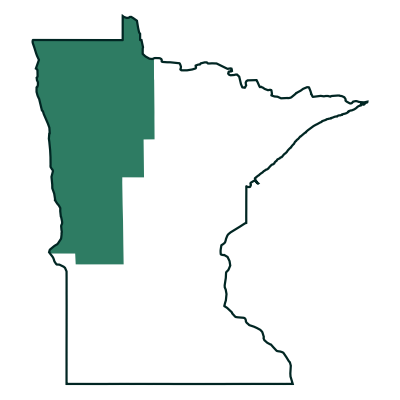 Northwest
Released September 28, 2026
Read the report →
Northwest
Released September 28, 2026
Read the report →
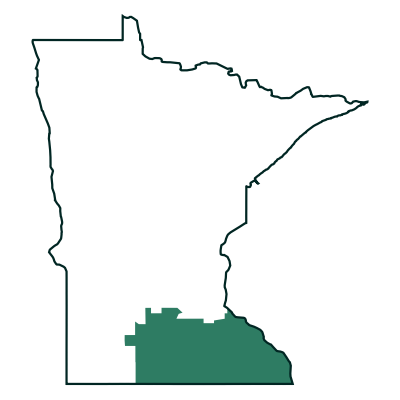 Southeast
Released October 7, 2026
Read the report →
Southeast
Released October 7, 2026
Read the report →
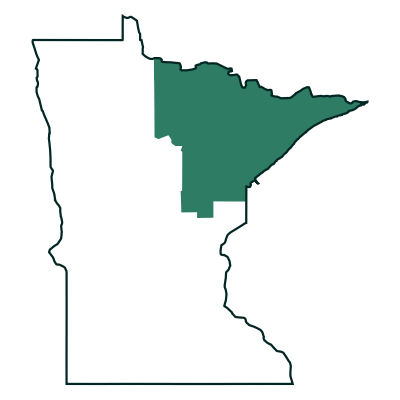 Northeast
Coming October 19, 2026
Coming soon
Northeast
Coming October 19, 2026
Coming soon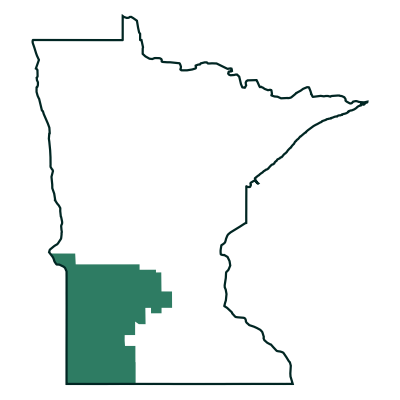 Southwest
Coming November 9, 2026
Coming soon
Southwest
Coming November 9, 2026
Coming soon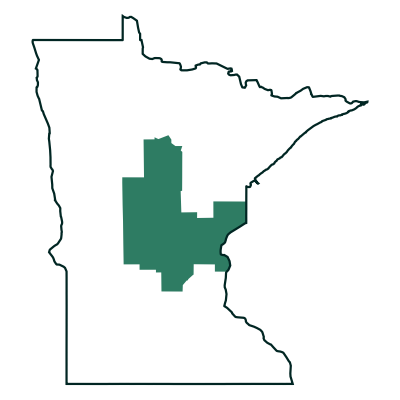 Central
Coming November 16, 2026
Coming soon
Central
Coming November 16, 2026
Coming soon